
REWIRE project kicks off to improve computational reproducibility practices in everyday research
As research becomes more computational, data-intensive, and AI-driven, reproducing results increasingly depends on access to the data, code, software, workflows, and computational environments behind them.
This is the challenge REWIRE, a new €2m Horizon Europe project starting September 2026, sets out to address.
Rather than creating another set of tools, REWIRE will focus on making proven reproducibility practices easier to adopt in everyday research, testing them in real settings across Europe and turning those experiences into practical guidance, training, and implementation pathways.
The consortium meets at the kick-off meeting in Athens
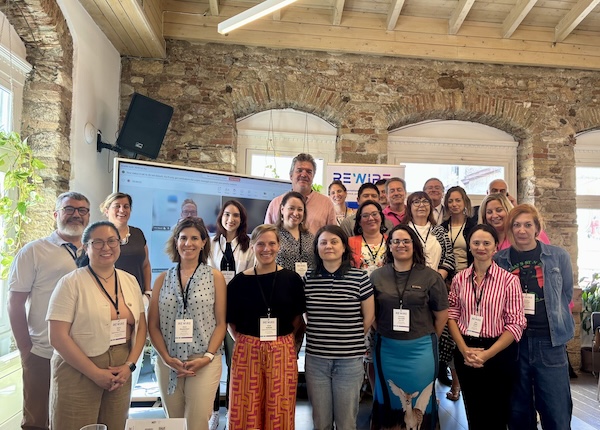
Group photo at the project kick-off (credit: REWIRE)
Following the official start on 1 September, partners came together in Athens on 17–18 September to set the foundations for the three years ahead. On Day 2, the focus turned fully to the work ahead.
REWIRE Coordinator Professor Yannis Ioannidis from Athena Research Center officially opened the Kick-off, marking the start of the project. His opening remarks placed reproducibility at the very foundation of science: “If you cannot repeat, why believe the results?”
For computational research, reproducibility is something we can actively work towards. He also highlighted the need for greater clarity around concepts such as reproducibility and reusability, and REWIRE’s role in bringing established best practices into computational research.
So, what will that look like?
- Building stronger evidence to inform reproducibility policies and practices
- Making existing tools and approaches easier to adopt and use in research
- Testing them through pilots across different research fields
- Building the skills, guidance and community needed for wider uptake
Our pilots will be central to this, helping us understand researchers’ needs and how different reproducibility approaches can work together across the research process.
Over the next three years, REWIRE will be sharing what we learn, what works, and the resources developed along the way.
eScience Lab involvement
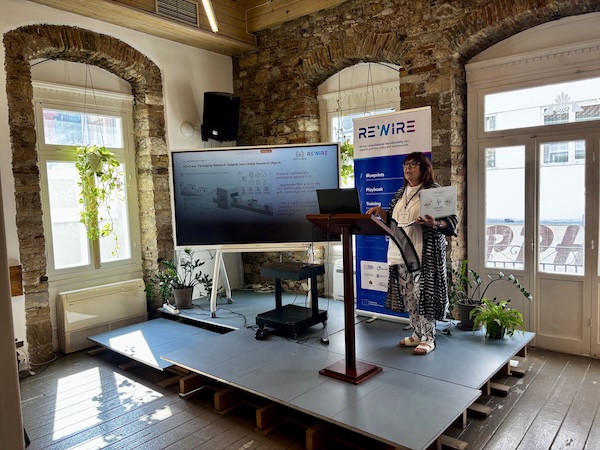
Carole Goble presenting RO-Crate intervention at the project kick-off (credit: REWIRE)
The University of Manchester have a large RO-Crate team, (as well as co-leading the international RO-Crate community with colleagues in Australia, USA and Europe) that work on many national and European (EOSC) projects using RO-Crates. Phil Reed will be the project interface to this team who will be incorporated as needs require.
eScience Lab will contribute work on many aspects, including the leading of three tasks:
- BLUEPRINTS: how the evidence gets built (co-led with Inria)
- RO-Crate profiles: supporting machine actionable data management plans
- Pilot Group B: coordinating implementation support for four pilot organisations
For more information, follow REWIRE on LinkedIn.